Last updated: October 27, 2026
Quick answer: for many farms, the first step is not full autonomy but a targeted automation system for one task; a practical starting point is often one system for one bottleneck, not a whole-farm overhaul.
Farm Automation and Robotics is a practical buyer’s guide for farms where labor is tight, timing is unforgiving, and the same job has to be repeated across acres without getting tired. The right system depends less on the buzz around “smart farming” and more on one question: do you need to automate a task, or do you need a machine that can make field decisions while it works? In plain terms, the topic is Farm Automation and Robotics, and the best fit is usually the one that matches the task, the field, and the season.
I write about agricultural systems, fleet software, and field equipment because the hard part is rarely the robot itself. It is fitting that robot into the crop, the terrain, the labor plan, and the farm’s existing machinery. For example, a system that works in a controlled barn may fail in mud, and a tool that saves 10 minutes per pass may still be the wrong purchase if support is weak.
Key takeaways
- Farm robotics makes the most sense where repetition, timing, and labor scarcity collide: spraying, weeding, milking, sorting, and repetitive transport.
- The best choice is often not “more automation” but the right level of autonomy for one task, one field shape, and one operating season.
- GPS guidance, telematics, vision systems, and robotic implements solve different problems; buying them as if they are interchangeable is a costly mistake.
- The hidden costs are integration, operator training, service access, battery or fuel logistics, and downtime when conditions change.
- A system can be technically advanced and still be the wrong fit if it cannot handle mud, crop residue, narrow rows, or mixed fleets.
- Farms that should skip robotics for now are usually the ones with irregular acreage, low utilization, unreliable connectivity, or no one available to maintain the system.
What farm automation and robotics actually mean on a working farm
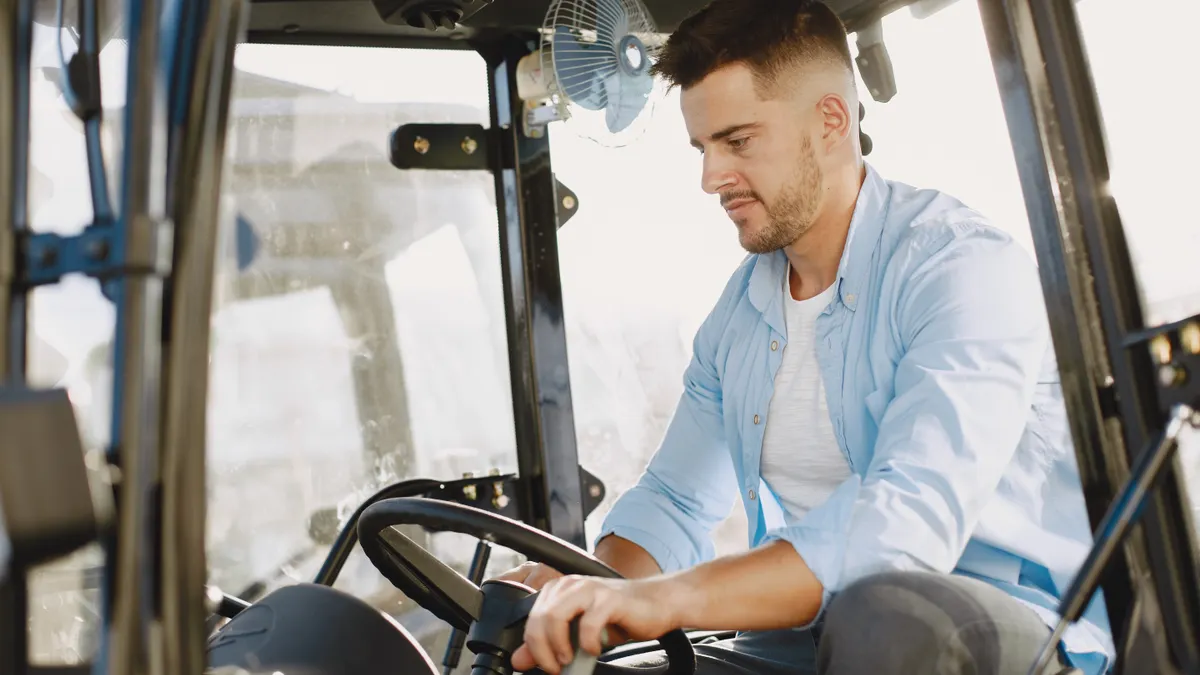
Farm automation and robotics are tools for reducing manual labor, tightening timing, and making repeated tasks more consistent. That sounds broad because the category is broad: a guidance system on a tractor, a robotic milking stall, an autonomous weeding machine, and a conveyor-fed packhouse sorter all count, but they solve very different problems.
The simplest way to think about the category is in layers. The first layer is automation that helps a human driver do a better job: auto-steer, section control, yield mapping, variable-rate application, and telematics. The second layer is task automation: robotic milking, greenhouse seeding lines, fruit-picking arms, autonomous mowers, and self-guided weeders. The third layer is fleet autonomy, where the machine moves and acts with very little human intervention.
That distinction matters because a lot of buyers shop as if every system is a full self-driving farm tractor. It usually is not. For most farms, the most useful early investment is still precision guidance or an attached implement with smart control, not a fully autonomous platform. Those systems are easier to fit into existing workflows and tend to have clearer support paths.
The trade-off is straightforward. The more autonomy you buy, the more you depend on clean data, reliable sensors, boundary mapping, service support, and edge-case handling. A robot that works well in a controlled block of lettuce or a dairy barn may be a poor choice on a hillside orchard, in wet clay, or across mixed field boundaries. If the farm changes shape often, the robot’s value drops quickly.
Because of that, the subject is not really “robots versus tractors.” It is “which jobs on this farm are repetitive enough, valuable enough, and well-bounded enough to automate?” For many operations, the answer will be spraying, hauling, feeding, milking, or weeding — not everything at once.
Which farm jobs are easiest to automate first?
The easiest jobs to automate are the ones with repeatable routes, predictable inputs, and clear stop conditions. Milking, feeding, spraying, weeding between rows, greenhouse handling, sorting, and material transport are the strongest candidates because the environment is either controlled or structured.
Dairy is the clearest example. Robotic milking systems work best where the herd is managed for voluntary traffic, udder hygiene, consistent stall design, and steady data capture. The machine can handle a narrow, repetitive task many times a day, and the economics improve when labor is hard to schedule. According to research from the University of Wisconsin-Madison Extension, the barn and herd management have to be adapted around the robot. If the barn layout fights the traffic pattern, the system underperforms no matter how advanced the arm or sensors are.
Weeding is another strong candidate, especially with camera-guided or vision-assisted mechanical systems. A machine can distinguish crop rows and target weeds in a way that reduces herbicide use or passes through a field more consistently than a tired crew. The catch is that these systems are sensitive to crop stage, row geometry, soil conditions, residue, lighting, and weed pressure. They are not magic in a muddy field after rain.
Spraying and fertilizing are often better served by automation than full autonomy. Section control, variable-rate application, boom height control, and GPS guidance can reduce overlap and improve timing without demanding a robot that drives itself end to end. The USDA has long highlighted precision application as a practical use case, and that is where many farms get the best return for the least operational upheaval.
The tasks that are hardest to automate are the ones with variability and judgment: selective harvest in soft fruit, repairs in the field, ad hoc livestock handling, and any job where the crop or terrain changes every few minutes. A generic article often sells robotics as if every job is a robotics job. That is the wrong frame. The best first use case is often the ugliest repetitive task, not the most glamorous one.
What is the real difference between guidance systems and autonomous robots?
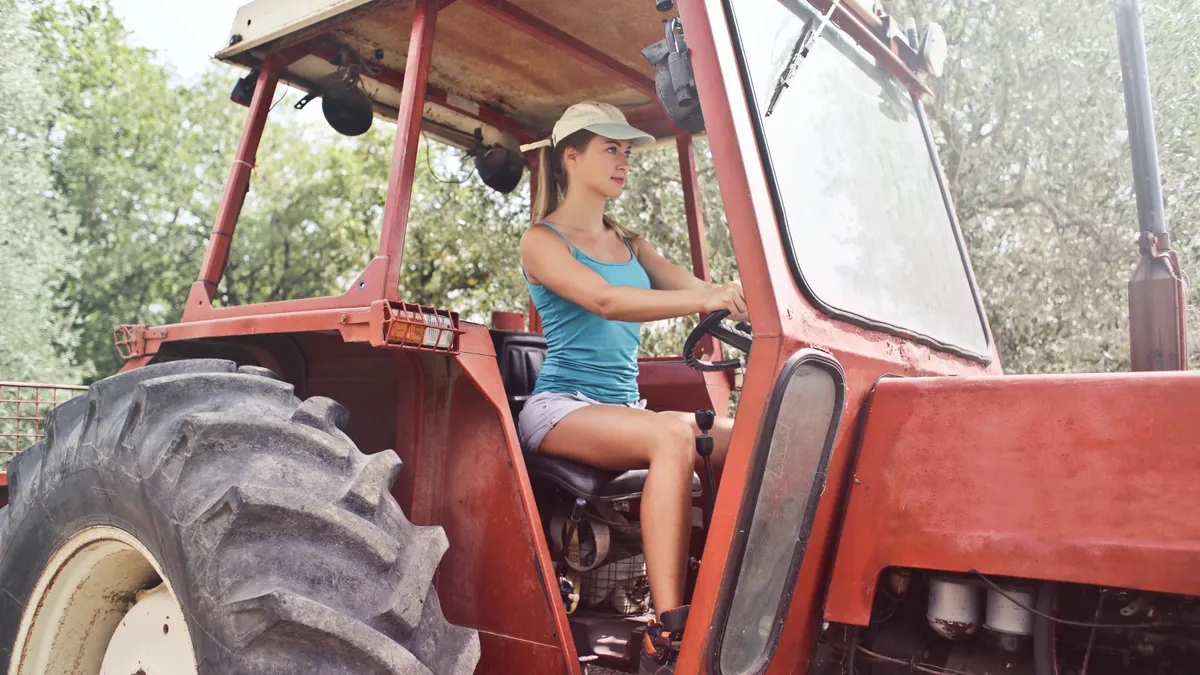
Guidance systems win for most farms because they solve the highest-frequency problem — operator accuracy — without replacing the whole machine. Autonomous robots win only when the task is narrow enough that the machine can act on its own for long stretches.
Here is the practical difference. Guidance systems help a human driver stay on line, reduce overlap, and work longer with less fatigue. Autonomous robots are expected to navigate, sense obstacles, make route decisions, and often manage the task as well. That makes the second category more complex, more expensive to integrate, and more sensitive to failure.
The most common mistake is buying autonomy when the farm only needs precision. If the tractor already does the field work and the problem is skipped rows, wasted spray, or poor night visibility, auto-steer and section control may solve more of the pain than an autonomous platform would. These systems also tend to be easier to service because the farm still has a driver in the seat.
Autonomous robots make more sense where labor is scarce and the same motion repeats across a clearly bounded area. Think greenhouse transport, orchard scouting, barn feeding, or weeding in a defined block. In those settings, the machine can be optimized for a narrow route and fewer variables. For a greenhouse, transport can be optimized around fixed aisles; for a barn, feeding can follow the same route each day.
The downside is that autonomy carries operational debt. Sensor cleaning, software updates, map management, obstacle handling, cybersecurity, and service response all become part of the workday. If that sounds like office IT inside a field operation, that is because it is. The farm gets more control, but it also gets more systems to monitor.
A buyer should choose guidance first unless the farm can say, in plain terms, “this machine will do a repetitive task in a defined environment for enough hours to justify its complexity.” If that sentence does not fit, the robot is probably ahead of the need.
The honest side-by-side
The right comparison is not “old equipment versus futuristic equipment.” It is “assisted machinery versus autonomous machinery” for the same job.
| Criteria | Guidance / assisted automation | Autonomous robotics | Winner for [condition] |
|---|---|---|---|
| Upfront operational complexity | Lower; the human still drives and supervises | Higher; route planning, sensing, and exception handling add layers | Guidance for farms that want simpler adoption |
| Best-fit job types | Spraying, planting, tillage, fertilizing, mapping | Milking, weeding, feeding, transport, controlled-environment handling | Autonomous for narrow, repetitive tasks |
| Sensitivity to field variability | More tolerant of mixed terrain and changing conditions | Less tolerant; performance can drop with mud, residue, or irregular layouts | Guidance for variable fields |
| Training burden | Moderate; operators learn screens, maps, and calibration | Higher; crews learn mapping, maintenance, overrides, and software workflows | Guidance for smaller teams |
| Integration with existing fleet | Usually easier with current tractors and implements | Harder if the robot needs dedicated infrastructure | Guidance for mixed fleets |
| Labor reduction | Improves efficiency but still needs a driver | Can materially reduce direct labor on the task | Autonomous where labor is the bottleneck |
| Downtime risk | Usually easier to bypass or keep working manually | Higher if the machine is central to the task | Guidance for farms that cannot afford stoppage |
| Data value | Good for yield, application, and pass records | Good for detailed task logs and machine-level decisions | Tie; depends on reporting needs |
| Infrastructure needs | Often needs GPS corrections, displays, calibration, connectivity | May also need charging, docking, safety fencing, or building changes | Guidance for low-infrastructure sites |
That table hides the most important point: assisted automation scales with existing machinery, while autonomous robotics often asks the farm to adapt the operation around the machine. That is a very different purchase.
What farm automation and robotics cost to run in practice
Farm automation and robotics cost more than the purchase order, and the recurring costs are where weak buyers get caught. The real budget includes software subscriptions where applicable, sensor upkeep, calibration, service contracts, spare parts, connectivity, operator training, and the labor time needed to monitor exceptions.
The obvious cost is hardware, but the hidden cost is coordination. A guidance system may need corrected GPS service, updates, and calibration checks. A robotic milking line needs cleaning routines, maintenance discipline, and herd management that fits the system’s cadence. A weeding robot may need crop-specific setup and field mapping before the first pass. None of that is free.
Connectivity is one of the most overrated assumptions in this category. A machine may not need constant high-bandwidth internet to move across a field, but it often needs enough connectivity for updates, logs, diagnostics, and fleet oversight. Farms with weak coverage should not assume the software will simply “sync later” without consequences. Delayed logs, broken remote support, and patchy alerts can erase a lot of the expected benefit.
Service access matters just as much as features. A robot with a strong spec sheet and no nearby technician is a liability when peak season arrives. The same is true for farms that cannot wait three days for a replacement sensor or a software fix. Buyers should ask who will support the system during planting, harvest, or calving season, not just who sells it.
The honest trade-off against the obvious alternative is this: buying a less autonomous system can lower operating risk even if it does not look as advanced. A well-supported guidance package that the team actually uses is better than a highly capable robot that sits idle because one person on the farm understands it.
Which farms should buy now, and which should wait?
Buy now if the farm has one clear bottleneck, enough repetition to keep the machine busy, and a field or barn layout that does not change every week. That is the profile for dairy operations, controlled-environment growers, large-row-crop farms with labor pressure, and specialty producers with a narrow high-value task.
The best candidates often share four traits. First, the job happens many times a day or many times per acre. Second, the task is predictable enough for maps, sensors, or rules to work. Third, the farm can support maintenance and training. Fourth, the machine will be used hard enough to justify its learning curve. A robot sitting unused for part of the season is expensive decoration.
Wait if the farm has fragmented acreage, mixed crop systems, unstable labor supervision, weak connectivity, or no one who can own the system day to day. A common failure mode is buying a machine to solve a labor problem, then discovering the operation has no internal person to keep maps, sensors, and service schedules in order.
There is also a size trap. Bigger is not always better in automation. A medium farm with a single repetitive bottleneck can get more practical value than a large operation with scattered, inconsistent tasks. Likewise, a small but intensive dairy or greenhouse may justify robotics sooner than a sprawling low-margin operation.
The most useful filter is not acreage. It is task density. If the machine will be busy, the case gets stronger. If it will only be useful for a few narrow windows each year, the return gets thin fast.
What a generic article gets wrong about agricultural robots
A generic article usually mistakes visibility for usefulness. It shows a drone, an autonomous tractor, or a robotic arm and treats them as if they solve the same problem. They do not. Some are scouting tools, some are labor-saving tools, and some are infrastructure-dependent systems that only work inside a very specific operating model. Consult a qualified agricultural equipment dealer, extension specialist, or automation integrator before assuming a drone, tractor, or robotic arm will fit a specific farm safely.
The second error is treating all farms as if they have the same operating conditions. A flat grain farm in the Midwest, a vineyard on a slope, a dairy with free-stall housing, and a vegetable operation with plasticulture do not need the same robotics stack. Terrain, crop geometry, moisture, and handling requirements change the decision more than marketing language does.
The third error is ignoring the people side. Automation changes roles. One skilled operator may become a fleet supervisor, a data checker, or a maintenance lead. If the farm does not plan for that shift, the machine creates confusion instead of relief. This is not theory. It is the practical cost of software and sensors in a place that used to run on muscle and habit.
The fourth error is pretending all automation is equally resilient. Some systems recover gracefully when conditions change. Others stop working the moment the crop is taller, the ground is wetter, the barn is dirtier, or the GPS signal degrades. Good buyers ask what happens on the worst week of the season, not the best one.
The final omission is the exit question. What happens if the vendor changes software terms, discontinues support, or raises service costs? In farm automation, the long tail matters. A machine that cannot be maintained for the next 7 to 10 years is a risk, even if the first season looks good.
When farm automation is the wrong answer
Farm automation is the wrong answer when the farm needs flexibility more than repeatability. If the same machine must handle loose soil one day, tangled residue the next, and a different crop pattern next month, a robot’s strengths shrink fast.
It is also the wrong answer when the real problem is not labor but process. A barn with poor workflow, a field with bad drainage, or a packing line with bottlenecks will not be fixed by adding sensors. The machine may highlight the problem, but it will not remove it. For some operations, the better investment is layout, drainage, maintenance, or staff scheduling.
Skip robotics if the farm lacks service support within a practical radius, if staff turnover is high enough that training never sticks, or if the operation cannot tolerate downtime during critical windows. A machine that is theoretically efficient but practically fragile is a poor fit for harvest season.
This is the point many buyers miss: automation is not a moral upgrade. It is a tool. If a human-driven system is dependable, cheap to repair, and already sufficient, replacing it with robotics can make the business less stable.
The verdict: which approach to choose and why
Choose guidance and assisted automation if the farm already owns tractors and implements, the main pain is operator accuracy or overlap, and the operation wants the lowest-risk upgrade path. Choose autonomous robotics if the job is narrow, repetitive, and labor-heavy enough that a machine can work with minimal supervision in a controlled environment. Neither if the farm has irregular acreage, weak service access, unstable workflows, or no one who can own the system after installation.
For most farms, the smartest first move is not full autonomy. It is a targeted automation layer that solves one expensive recurring task without forcing the whole operation to change shape. That is the better fit for the majority of buyers because it delivers practical value sooner and carries less operational risk.
What to ask before signing a purchase order
Farm automation and robotics should be bought with the same discipline as any other major capital item: ask what breaks, who fixes it, and what the farm loses while it is down. The good answer is specific, not promotional.
Ask whether the system needs dedicated infrastructure, whether it works offline, what happens in mud, dust, glare, or low light, and how updates are delivered. Ask who trains operators, who supports harvest-season failures, and what data the machine exports in a usable format. Ask whether the system is compatible with the farm’s existing tractors, barns, or conveyors, or whether it needs a redesign around it.
That last point is the one most likely to save money. If the machine requires the farm to reorganize itself completely, the buyer is not just buying equipment. The buyer is buying a new operating model. That can be right for some operations, but it is a much bigger decision than a line item on a quote.
For a farm that wants a durable answer, the right question is not “Is robotics the future?” It is “Which task on this farm is repetitive enough, valuable enough, and stable enough to automate without making the rest of the business harder?” When that answer is clear, the purchase decision usually becomes clear too.
Authoritative sources worth checking
The National Institute of Food and Agriculture has research and extension material on agricultural technology and precision agriculture that helps ground vendor claims. The USDA also publishes material on automation-related farm programs and research priorities. For equipment safety and vehicle standards, the Occupational Safety and Health Administration and relevant ISO/ANSI standards are the places to verify assumptions about safe operation, guarding, and worker exposure.
Drafted with AI; not yet reviewed by a person.