Last updated: October 27, 2026
Quick Answer: In most farms, the benefits and challenges of farm automation for labor and output come down to one number: how many repeated manual checks the system removes each day.
Key Takeaways
- Farm automation changes repeatable jobs, but it does not make the work disappear.
- Farm automation cuts labor pressure by reducing short, repetitive daily interventions.
- Farm automation raises consistency by repeating the same setting, timing, or response more often than a tired person can.
- Farm automation can support uptime by keeping critical tasks on schedule, but it also adds new failure points.
Benefits and challenges of farm automation for labor and output can cut labor pressure, stabilize output, and reduce day-to-day variability, but it also adds maintenance, software, and integration work that many farms underestimate. The right question is not “Can automation help?” It is “Which tasks justify the capital, the upkeep, and the operator training on this farm?” For context on connected agricultural systems, see the USDA’s precision agriculture resources and FAO guidance on digital agriculture. USDA FAO
What farm automation actually changes on a working farm
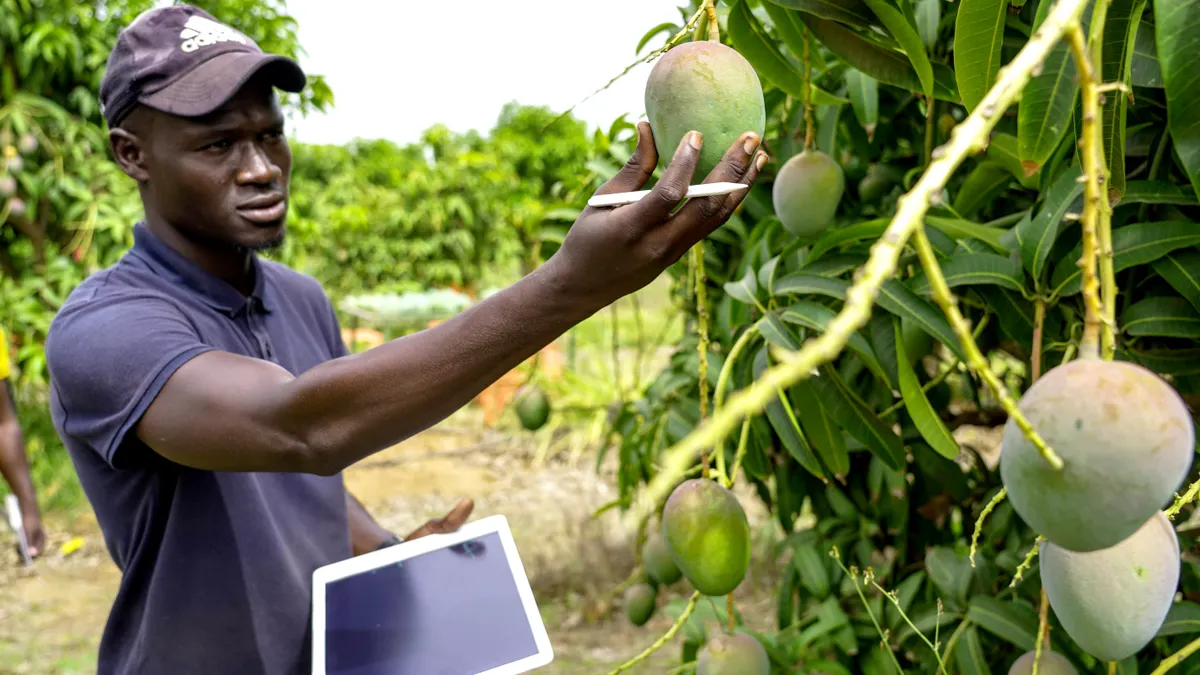
Farm automation changes how repeatable jobs get done, not whether they exist. A controller, a sensor, or a timed system takes over a narrow task such as starting irrigation, dosing feed, moving air, or logging conditions, while operators shift toward supervision, troubleshooting, and decision-making. For related background, see what is farm automation.
That matters most when labor availability is uneven. A farm that depends on a 6 a.m. milking run, a midnight irrigation check, or a daily ventilation adjustment has exposure to sick days, hiring gaps, and seasonal turnover. Automation narrows that exposure by making the routine part less dependent on a person being in the right place at the right time.
The usual mistake is to imagine farm automation as a single product. It is really a stack: sensors measure, controllers decide, actuators move equipment, and operators verify that the system is still doing the right job. If one layer is weak, the whole system becomes less useful. A $500 controller cannot save a process that is badly designed.
This is why the topic belongs under “farm automation” rather than “replacement labor.” The real gain is not that people disappear from the field. The gain is that the farm can keep a process running with fewer manual touchpoints and fewer missed cycles. The limit is just as real: if the machine is wrong, it can be wrong at scale.
For a broader definition of the term, the hub page on what is farm automation belongs alongside this guide, not inside it. This page focuses on the adoption question: what improves, what gets harder, and what still needs people.
How farm automation reduces labor pressure without removing operators
Farm automation reduces labor pressure by cutting the number of short, repetitive interventions a person has to make each day. It does not remove operators; it changes their shift from physical repetition to oversight, exception handling, and maintenance.
That distinction matters because a farm is not a factory floor with a single fixed rhythm. Weather changes, crop stage changes, animal behavior changes, and equipment ages. An automated task can run for 12 hours without a person touching it, then demand 30 minutes of human attention because a valve sticks or a sensor drifts. The labor savings are real, but they are lumpy.
A practical way to evaluate labor savings is to compare the job’s frequency, urgency, and skill requirement. A task that happens every 15 minutes, must be done on time, and needs little judgment is a strong automation candidate. A task that happens twice a week, depends on visual judgment, and varies with field conditions is less compelling.
Use this order to judge whether a process is worth automating:
- List the task and its cadence, such as “check irrigation pressure every 2 hours” or “record barn temperature three times a day.” The result is a clear baseline, not a vague sense of busyness.
- Mark the labor that task consumes, including travel time, setup, and recordkeeping. On many farms, the hidden cost is not the 5-minute action but the 20-minute walk or drive attached to it.
- Decide whether a sensor, controller, or timed system can perform the repeat part with acceptable accuracy. A system that needs constant manual correction is not saving labor; it is moving it.
- Keep one operator responsible for review, alarms, and maintenance schedules. The result should be fewer interruptions, not no accountability.
- Recheck after one season. If the task still needs the same number of human touches, the automation is cosmetic.
The honest trade-off is training. Operators need to understand thresholds, alarms, and failure modes, or they will either ignore warnings or overreact to normal variation. A system that only one person knows how to run is fragile, even if it saves labor on paper. For practical worker-safety guidance, consult OSHA resources before changing operating procedures. OSHA
Why consistency is one of the biggest output gains

Farm automation improves consistency by applying the same setting, timing, or response more often than a tired person can. That steadiness can lift output quality even when total production does not jump dramatically.
Consistency matters because many farm processes reward small deviations. Irrigation that starts late, feeding that varies by shift, or ventilation that swings too far can create uneven growth, stressed animals, or variable quality. A controller does not get distracted at hour 14. A sensor does not forget a reading because the day got busy.
This is where automation often pays back more in quality than in raw volume. Better uniformity can mean fewer rejected units, less waste, fewer stress events, and less rework. A farm that is already close to its ceiling may not see a dramatic percentage increase in yield, but it may see tighter spread in performance. That is still valuable.
The catch is that consistency only helps if the inputs are right. Bad calibration produces consistent errors. A sensor that reads low every day will make the controller react the wrong way every day. That is why maintenance schedules are not an afterthought. They are part of the output system.
A useful benchmark is simple: if a process depends on a human making the same judgment 20 times a day, automation may improve repeatability. If the process depends on interpreting changing field conditions with experience and context, automation helps more as a decision aid than as a full replacement.
The software side also matters. Many farms now use controllers that must talk to sensors from different vendors, and integration complexity can become the hidden drag on output. When systems do not exchange data cleanly, operators spend time translating screens, exporting files, or checking two dashboards for the same event. That friction does not create output; it steals it. For interoperability standards, see the IEC and IEEE standards libraries through vendor documentation and official standard bodies. (Source: IEC IEEE)
Because of that, the best results usually come when automation supports a stable process, not when it is bolted onto a chaotic one. If the barn, field, or storage workflow is already inconsistent, the machine only speeds up inconsistency.
Where uptime improves and where it breaks down
Farm automation can improve uptime by keeping critical tasks on schedule, but it also introduces new failure points that manual systems do not have. A power outage, dirty sensor, bad firmware setting, or failed actuator can stop a process that used to limp along by hand.
Uptime is the strongest benefit when the process is time-sensitive. Ventilation, watering, feeding, and environmental control often cannot wait for a person to arrive. Automation keeps those systems active overnight, during weekends, and across short labor gaps. That is a real operational advantage, especially on farms where one missed cycle cascades into a larger problem.
The weakness is dependency. A manually managed task can sometimes survive a rough patch because a person improvises. An automated task may work beautifully until one component fails, then fail all at once. That is why reliable installations usually include alarms, manual override options, and a clear escalation path.
Two standards or practices matter here in plain language: redundant thinking and recorded checks. Redundant thinking means assuming any one device can fail. Recorded checks mean someone reviews logs or alerts on a schedule, not only when a problem becomes visible in the crop or herd. Even a basic daily review can catch drift before it becomes downtime.
A practical uptime rule is to treat the automation stack as equipment, not magic. If a system needs a 10-minute inspection each morning, that is part of the running cost. If it depends on cloud access, then connectivity becomes as important as the device itself. If it only works when one operator remembers a password, uptime is weaker than it looks. Consult a qualified technician or ag engineer for your site-specific setup, and compare the plan with the manufacturer’s maintenance guidance. manufacturer documentation
This is also where many buyers overreach. A farm with frequent power interruptions or unstable connectivity may not be ready for a highly networked setup unless backup power and local fallback are part of the plan. The problem is not automation itself. The problem is pretending that the support system does not matter.
The real maintenance burden nobody should ignore
Farm automation shifts maintenance from occasional mechanical repair to continuous care of sensors, controllers, wiring, software, and calibration. That is the trade-off that is easiest to underestimate and hardest to recover from after purchase.
A manual system often fails visibly. An automated system can fail quietly. A sensor may drift 5% before anyone notices. A clogged line may still “look normal” on a dashboard if the wrong indicator is being watched. That is why maintenance schedules need to be written down and assigned, not left as informal memory.
A solid maintenance routine is usually boring, and that is the point. It should include cleaning sensors, checking connections, confirming alerts, testing override buttons, and reviewing logs. The interval depends on the environment: dust, moisture, temperature swings, and vibration all shorten service life. A barn or field shed is harsher than an office.
Common mistakes here are expensive:
- Skipping calibration because the system “looks fine” costs accuracy first, then output.
- Letting one operator own the whole setup costs resilience when that person is absent.
- Adding devices without a service plan costs time later because every new unit creates another failure point.
- Ignoring software updates costs compatibility when controllers stop speaking the same language as newer sensors.
The better approach is to set maintenance schedules before the system goes live. A weekly check, a monthly inspection, and a seasonal review are often more realistic than an “as needed” promise. The exact cadence depends on the equipment and environment, but no automation stack stays healthy on hope.
This is also where the reader should be honest about who farm automation is not for. If a farm has no appetite for routine checks, no spare time for troubleshooting, and no one comfortable reading alarms and logs, automation can become a burden instead of a benefit. It may still be worth doing, but only after the support structure is in place.
For technical guidance on connected systems and interoperability, the IEEE and IEC standards bodies are relevant references to consult through the equipment vendor’s documentation; the point is to demand compatibility, not to buy more software.
How to tell if the benefits will outweigh the friction
Farm automation is worth serious consideration when the farm has repeatable tasks, labor gaps, and enough operational discipline to keep the system maintained. It is a poor fit when the process is highly variable, the team cannot support upkeep, or the farm needs flexibility more than precision.
A good adoption decision starts with the cost of doing nothing. If labor availability is stable, if the task is not time-critical, and if output losses from inconsistency are small, automation may not be the first dollar to spend. If missed checks, uneven timing, or late responses are already hurting output, automation becomes more attractive.
The second question is integration complexity. A simple standalone controller may be easier to justify than a farmwide platform that requires multiple sensors, network access, and data sharing across systems. Each added connection increases the chance of mismatch. That does not mean “avoid integration.” It means value it honestly.
The third question is whether the farm can support operators, not just devices. Because of that, the best installations leave the team with clearer alerts, fewer manual chores, and a predictable maintenance rhythm. The worst installations leave operators staring at screens, chasing alarms, and guessing which system is right.
A practical decision rule is this: automate the most repetitive, measurable, and failure-prone task first. Start where a controller can replace routine labor without forcing a full redesign of the farm. Then expand only after the first system runs through a full season without constant intervention.
That is the central judgment on farm automation. It is strongest when it saves labor on boring, repeatable work and improves consistency on time-sensitive processes. It is weakest when the farm lacks maintenance discipline, when the software stack is messy, or when managers expect machines to eliminate people instead of changing how people work.
The Verdict on farm automation for labor and output
Farm automation usually pays off by reducing routine labor, tightening consistency, and protecting uptime, but it asks for steady maintenance and a team that can handle controllers, sensors, and troubleshooting. It is the right move for farms that value repeatability and can support the system. It is the wrong move for farms that want a hands-off fix with no upkeep.
What are the disadvantages of farm automation?
The main disadvantages are maintenance, integration complexity, and dependence on reliable power and sensors. A system can fail quietly, and a bad setup can create more work than it removes. The first cost is rarely the only cost. Calibration, updates, and operator training continue after installation, so the system needs ongoing attention.
Does farm automation replace workers?
Farm automation usually changes worker roles more than it replaces them. Routine tasks may shrink, but operators still need to monitor equipment, respond to alarms, and handle exceptions. In many cases, the farm needs fewer hands on repetitive work and more skill in supervision, maintenance, and decision-making.
Is farm automation worth the cost?
Farm automation is worth the cost when labor availability is tight, the task repeats often, and missed timing hurts output or quality. It is harder to justify when the process is irregular or the farm cannot maintain the system. The answer depends on whether the farm can support the upkeep as well as the equipment.
Drafted with AI; not yet reviewed by a person.