Last updated: October 27, 2026
Key Takeaways
- Robots handle a few farm jobs well: weeding, milking, spraying, autonomous driving, and controlled-condition harvesting.
- Weeding robots target weeds without blanket spraying and are among the clearest agricultural robot uses today.
- Milking robots automate dairy routines and are among the most established robots in regular farm use.
- Autonomous tractors are best when the task is steady guidance, not complex crop manipulation.
Agricultural robots are machines built to do farm work that is repetitive, dirty, tiring, or hard to staff, and the topic of agricultural robots: types, uses, and farm tasks they handle is most useful when the task can be seen, measured, and repeated the same way many times. For a farm manager or grower, the real question is not “can robots work in agriculture?” but “which farm task is mature enough for robots, and which one still needs a person in the cab or the parlor?” Quick Answer: agricultural robots are already practical for a narrow set of tasks, especially where the work repeats daily or follows fixed rows.
What agricultural robots do on a farm
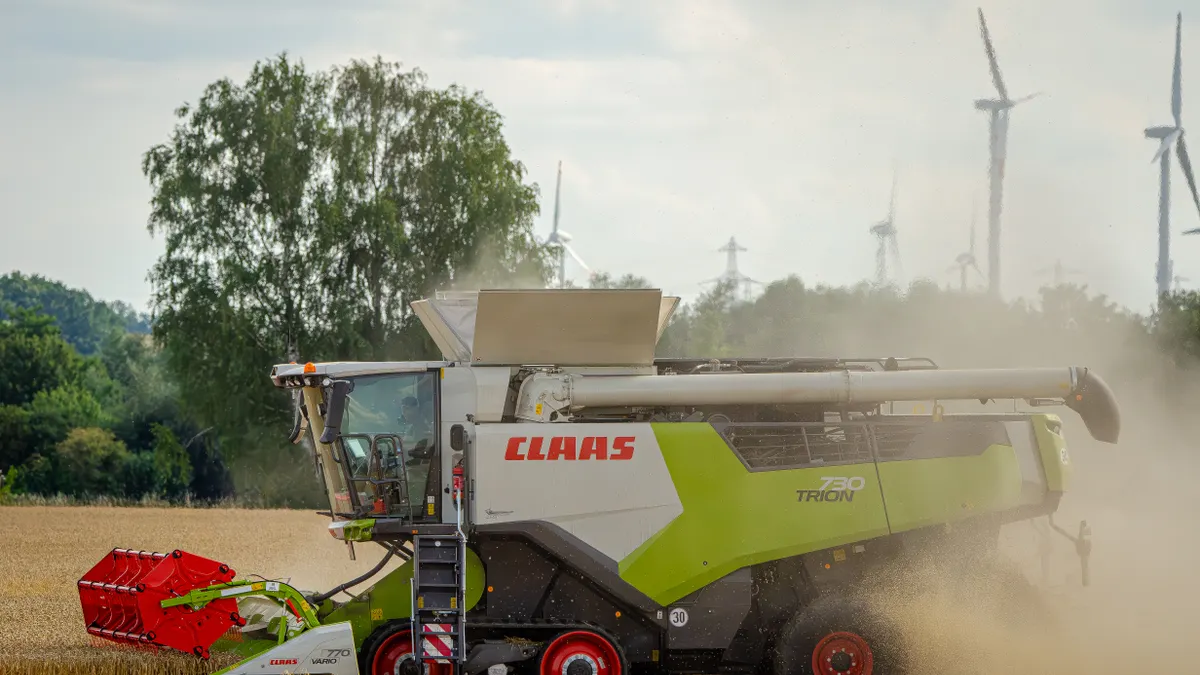
Agricultural robots handle a narrow set of jobs very well: weeding, milking, spraying, autonomous driving, and harvesting in controlled conditions. That list matters because the technology is not one thing. A robotic weeder in a lettuce field, a milking robot in a dairy barn, and an autonomous tractor on a broadacre farm solve different problems and use different hardware.
The common thread is repeatability. Robots do best when the crop rows are regular, the target is visible, and the task can be broken into steps such as “find plant,” “move tool,” “apply action,” and “log result.” A tractor that follows RTK-guided paths, for example, can stay on line within a tight tolerance. A vision-guided sprayer can target weeds between rows. A dairy robot can identify each cow by an ID tag and manage a milking cycle without a human attaching clusters by hand. RTK guidance is one reason autonomous field work is so often discussed in precision agriculture.
They are weaker when the field is messy, the crop is uneven, or the object being handled changes shape every second. A bruised peach, a muddy root crop, and a tomato cluster hidden under leaves are all harder than they sound. That is why agricultural robots are strongest in narrow applications first, then expand.
This is also where the topic connects to farm automation as a whole. If the wider system interests you, the hub on what is farm automation gives the bigger picture; this guide stays on the robots themselves. See also the related overview on farm automation, the field guide to precision agriculture, and the practical guide to autonomous tractors.
Weeding robots: where the most visible savings happen
Weeding robots remove or suppress weeds without blanket spraying, and they are one of the clearest uses of agricultural robots today. They work in vegetables, specialty crops, row crops, and organic systems where herbicide options are limited or where growers want less chemical use and less hand labor.
The basic principle is simple: a camera or sensor identifies crop versus weed, then a tool acts only on the weed. That tool might be a blade, a tine, a micro-sprayer, heat, steam, or a mechanical hoe. In row crops, the robot may run between planted rows using GPS or machine vision. In high-value beds, it may move slowly within the row and target individual plants. For a farm planning one of these systems, consult a dealer, agronomist, or other professional before choosing the sensing mode or tool.
A practical workflow looks like this:
- Map the field or bed layout before the season starts, using row spacing, crop stage, and headlands so the robot knows where it can travel.
- Set the detection mode for the crop stage; young seedlings need different settings than mature plants, because the crop and weeds can look similar early on.
- Run the robot in the narrowest workable window, often when weeds are small, so cutting or spot treatment is easier and faster; consult a professional or equipment supplier on the best timing for your crop and region.
- Check missed weeds after the pass and adjust camera threshold, tool depth, or speed before the next block.
- Log the problem areas, because patchy weed pressure usually means soil conditions, irrigation, or transplant spacing need attention.
The trade-off is speed versus precision. A robotic weeder can reduce hand hoeing, but slow passes and careful sensing can make it less efficient than conventional cultivation on large, uniform fields. It is also not a magic fix for heavy weed pressure after a missed window. If weeds are already large, the robot loses the advantage.
For farms with labor shortages or organic weed pressure, this is one of the strongest robot categories. For low-margin acreage where every pass must be cheap and fast, it may be too specialized.
Milking robots: the clearest barn example
Milking robots automate the milking routine for dairy cows, and they are one of the most established agricultural robots in regular use. The machine identifies the cow, cleans the teat area, attaches the milking cups, monitors flow, and releases the unit when the udder is finished.
The value is not just labor savings. The system also changes how cows move through the barn. Many dairies use voluntary milking, where the cow chooses to enter the unit, often several times a day. That means the barn layout, feed strategy, and cow traffic all matter. A robot in the wrong barn design becomes an expensive bottleneck. In other words, the robot is only as useful as the traffic pattern around it.
Here is what the task really includes:
- Animal identification, usually by collar, tag, or transponder.
- Teat location by laser or camera guidance.
- Cup attachment and flow monitoring.
- Cleaning and post-milking sanitation.
- Data capture for each cow, such as visit timing and milk yield trends.
That data is part of the value. A milking robot can flag cows that are not visiting on schedule or whose milking pattern changes. The machine turns routine work into a stream of animal-level records. Milk meters and visit logs also give managers a time-stamped record of the herd.
The limitation is management overhead. A dairy does not buy a milking robot and then forget about the herd. Teat condition, cow traffic, bedding, feed access, and barn hygiene still need attention. Some herds adapt well; others do not because their buildings, cow temperament, or staffing model fit conventional parlors better. A robot is wrong for a dairy that cannot rework the barn or does not want daily data management.
This category also demands careful maintenance. Wash cycles, liners, vacuum systems, and attachment arms all need routine checks. The machine is doing repetitive work; that does not mean it is low-maintenance.
Autonomous tractors: where driving is the job, not the goal
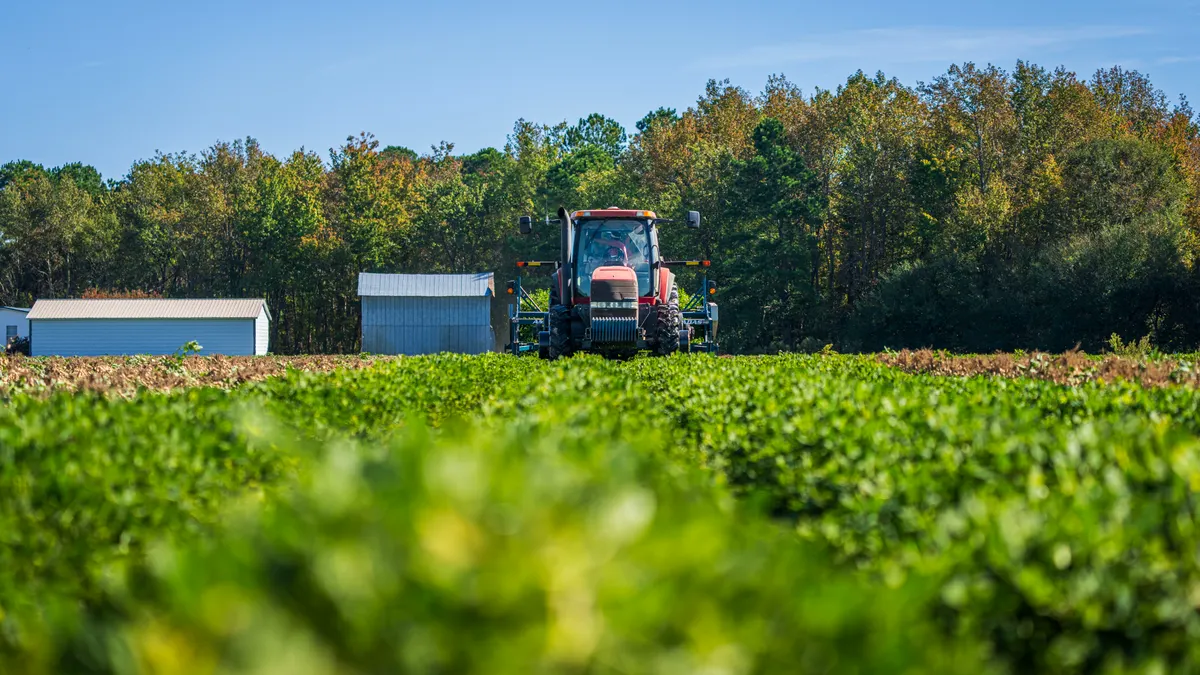
Autonomous tractors handle field travel, and they are most useful when the task is steady guidance rather than complex crop manipulation. They may till, seed, spray, cultivate, pull implements, or transport loads while following a planned route without a person on board.
The word “autonomous” covers a range. Some systems are full self-driving units. Others are supervised tractors that still require a person to monitor the job remotely or stay nearby. In practice, autonomy often starts with path following: the machine holds a line, turns at the headland, and repeats the route with consistent overlap. Once that pattern is established, the job becomes much more repeatable.
That makes tractors a good fit for large, repetitive jobs such as:
- Seeding on long, straight passes
- Tillage in open fields
- Spraying on fixed tramlines
- Mowing and forage work in broad areas
- Towing carts or implements over known ground
The biggest advantage is consistency. A machine that repeats the same line reduces overlap and skips, and it can run longer than a fatigued operator. The biggest drawback is that fields are not perfect rectangles. Mud, rocks, washouts, gullies, fence posts, equipment failures, and unexpected people or vehicles all complicate autonomy. A human still has to plan routes, monitor exceptions, and recover the machine if conditions change.
This is why autonomous tractors fit broadacre operations and controlled field systems better than small, irregular farms with many obstacles. They are also not the first choice when the main need is delicate crop handling. If the job is “drive straight for 6 hours,” autonomy makes sense. If the job is “navigate around mixed crops, irrigation gear, and loose trellis wire,” it is a harder sell.
For buyers, the real comparison is not tractor versus robot. It is autonomous guidance versus a driver in the cab. That choice depends on field size, labor cost, and how predictable the workday is. For more detail, see the related page on autonomous tractors and the broader context in precision agriculture.
Spraying robots and harvesting robots handle different levels of precision
Spraying robots apply crop protection only where the target exists, while harvesting robots try to pick, cut, or collect produce without damaging it. Those are both agricultural robots, but they sit at very different maturity levels.
Spraying robots are easier to deploy than harvesting robots because liquid application is less physically delicate than picking fruit. A robot sprayer can use GPS, boom sensors, machine vision, or weed maps to treat only a section of the field or only the weed patches; consult a professional or equipment specialist to match the system to the crop and spray window. That reduces wasted chemical and can help in rows where blanket spraying is unnecessary. The limitation is that spray quality still depends on coverage, weather, nozzle choice, and travel speed. A robot cannot fix poor agronomy or the wrong spray window.
Harvesting robots are the hardest category because produce is inconsistent. Fruit size varies, leaves block the view, stems bend, and many crops bruise easily. A machine has to detect ripeness, find the right grasp point, move without tearing, and place the crop gently. That is why harvesting robots are strongest in crops or setups that are already structured for machine access, such as some greenhouse systems, trellised crops, or repetitive picking environments.
The practical difference is easy to miss:
- Spraying robots act on surfaces and zones.
- Harvesting robots act on individual objects.
That difference drives cost, speed, and reliability. A spraying robot can often run at field pace, while a harvesting robot may need slow, careful motions and frequent recalibration.
A generic article gets this wrong by treating “harvesting” as one problem; consult a crop specialist or automation supplier before assuming one robot design will cover several crops. It is not. A strawberry, apple, tomato, and head lettuce each ask for a different end effector, a different vision setup, and a different tolerance for damage. If a farm mainly needs throughput, harvesting robots may not be ready. If the farm needs labor replacement in a narrow, repetitive crop, they become more plausible.
How to choose the right robot for the farm task
The right agricultural robot is the one matched to a single task, not the one with the longest feature list. Farms usually get better results by starting with the task that is repetitive, high-labor, and easy to measure.
Use this decision sequence:
- Name the job in one sentence, such as “remove weeds between lettuce rows” or “milk 120 cows twice a day.”
- Check whether the environment is structured enough for sensors and repeatable motion, such as fixed rows, a barn lane, or a tramline.
- Estimate how often the task repeats during the season; daily or weekly jobs justify robotics more easily than occasional ones.
- Compare the robot to the current method on labor, timing, and tolerance for error, not just on sticker price.
- Ask what changes the farm must make around the robot: row spacing, barn layout, connectivity, charging, washdown, or maintenance time.
- Pilot one block, one barn, or one crop before expanding.
That sequence keeps the decision grounded in operations. It also prevents the most common mistake: buying a robot for the wrong bottleneck; consult a dealer, agronomist, or other professional before committing to a purchase. A farm can be short on labor but still not be a fit for autonomy if its fields are too irregular or its crop changes too often. Another common mistake is expecting one machine to cover every job. Agricultural robots are specialists.
The honest trade-off against traditional equipment is flexibility. A human can improvise across tasks; a robot needs structure. That structure pays off when the task repeats the same way every day, and it becomes a liability when the farm keeps changing.
If the farm’s work is mostly broadacre driving, autonomous tractors may fit first. If the pressure is hand labor in vegetables, weeding robots or harvesting robots are the better place to start. If the biggest pain point is dairy labor, milking robots stand apart because they solve a barn task that repeats every day, all year.
What agricultural robots still cannot do well
Agricultural robots still struggle with messy, unstructured, or highly variable work, and that limitation matters as much as their strengths. A lot of marketing hides this. The reality is that robots are strong at one job at a time, but many farms need a worker who can notice a broken fence, a wet patch, a sick plant, and a missing tool on the same round.
The hardest problems are:
- Crops that hide under leaves or change shape as they grow.
- Fields with uneven terrain, mud, debris, or frequent obstacles.
- Tasks that need judgment more than repetition.
- Work that changes from one hour to the next.
That is why a robot can be a poor fit for a farm that wants one machine to replace an entire crew. It can also be a poor fit for growers with irregular blocks, mixed crops, or an always-changing harvest plan. The machine may still save time on a narrow task, but it will not remove the need for management.
A useful rule is this: if the farm task can be described as “detect, repeat, and log,” robotics is worth a look. If the task sounds like “adapt, improvise, and inspect,” people still do better.
For a reader deciding where to begin, that is the real filter. Agricultural robots are not an all-purpose answer. They are a set of specialized tools for farm jobs that can be standardized, measured, and repeated.
What can agricultural robots do?
Agricultural robots can weed, milk, spray, drive tractors, and harvest certain crops, especially where the work is repetitive and the environment is structured. They are best at tasks that can be repeated the same way many times, such as row-following, targeted spraying, or routine milking in a dairy barn.
Which crops use agricultural robots?
Agricultural robots are used most often in vegetables, dairy, broadacre row crops, orchards, vineyards, and greenhouse systems. Crops with regular spacing and predictable access are easier to automate than crops that bruise easily or hide under foliage. That is why lettuce, corn, dairy, and some trellised fruit systems often show up first.
Are agricultural robots practical today?
Agricultural robots are practical today for specific jobs, not for every farm task. Milking robots, weeding robots, and some autonomous tractors are already useful in the right setting, while harvesting robots are more limited and crop-specific. The key question is whether the farm can support the machine’s need for structure, maintenance, and workflow changes.
Drafted with AI; not yet reviewed by a person.